Saturday, August 18, 2012
Saturday Symbol Fairy 8/18/12
We've had several crazy storms at my house this past week so I'm paying tribute to the power and beauty of nature by discussing the symbolism of lightning.
Lightning symbolizes sudden illumination and the loss of ignorance. It can also represent destructive or creative power as well as angry intervention or retribution by the gods. This is seen in the Tarot, where lightning is interpreted as a sign of divine presence. Similarly symbolic, thunderbolts are a common attribute of many sky gods, embodied in the S-shaped motif on the clothes of the Romano-Celtic sun or sky dieties and in Thor's hammer.
On a related personal note, my sweetie of twenty-two years uses a lightning bolt as a maker's mark and as the division on his Society for Creative Anachronism heraldry.
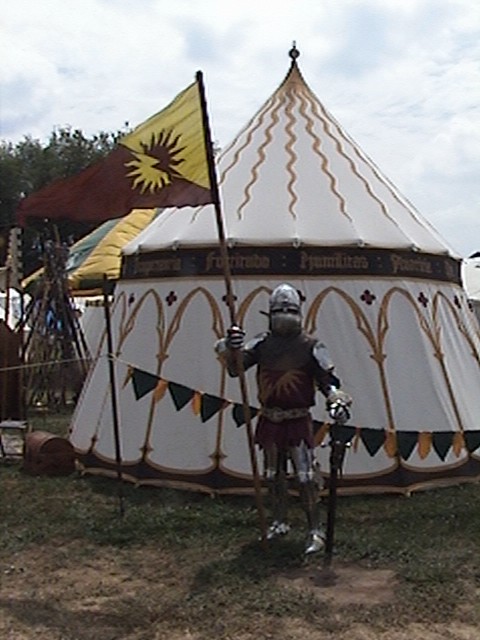
He chose this emblem because of a scar he's had on his forehead for as long as he can remember. Imagine our surprise when we first learned of J. K. Rowling's Harry Potter! Given its meaning, a lightning bolt is the perfect symbol of Harry Potter's adventure and his dealings with Lord Voldemort. And my sweetie? I wonder...
Saturday, August 11, 2012
Saturday Symbol Fairy 8/11/12
Having spent all week working on the main illustration of my “Saint George and the Dragon” manuscript, I decided today’s symbol would be the Dragon. The word “dragon” in ancient Greek means “snake.” Many dragon images, past and present, are endowed with snake-like looks and qualities. In Greek mythology, there are many different types of dragons including several that are snake-based like the Hydra and Python, of water and of earth, respectively. In western cultures, dragons are often associated with evil but in East Asia, they are commonly considered beneficiary. The dragon’s ability to fly and breathe fire may stem from an origin belief that meteorites were dragons streaking through the sky. The link between dragons and meteors is strengthened by the Celtic story of King Arthur in which Uther took the surname Pendragon (“chief-dragon”) after he saw a dragon-shaped comet (although some say it was his elder brother who saw it). According to Carl Jung, winged dragons represent the transcendent symbolism of the snake and the bird. Combine that with either water, another transcendent symbol, or fire, a destructive symbol, and the dragon becomes the epitome of transcendence. But a dragon can also symbolize primal force, destruction, devouring, as well as wisdom and longevity (in Oriental culture).
I have always loved dragons. I wore a dragon head pendent for years and decorated my room extensively in dragon art. As a teenager, I was lucky enough to be the subject of a dragon-based illustration by my good friend and incredible artist, Robin Wood. That portrait became later became a Dragon Magazine cover!
Jung, Carl G., ed. Man and his Symbols. London: Aldus Books, 1964.
Shepherd, Rowena and Rupert. 1000 Symbols. New York: Thames & Hudson, 2002.
Saturday, August 4, 2012
The birth of the Saturday Symbol Fairy
I chose to start my "symbol a week" posts on 8-4-12 because it is such a phenomenally-appropriate numerological date. Eight is my absolute favorite number and is also a symbol of perseverance, goals and earthly wisdom. Four is symbolic of solidity, stability, and foundation. Twelve is the sum of both so it lends a sense of completion. Why chose to post as a "symbol fairy?" Well, it seemed appropriate. It ties into the gifting or bestowing of something on another. Plus I've had a run of fairy-oriented events in the last few weeks, so it fits.
And the first ever symbol? A tree! The symbol of evolution, physical growth or psychological maturation, rebirth, longevity or immortality, wisdom, strength, protection, fertility, offspring, agriculture, sacrifice, resurrection, temple, cross, pillar, hope, mother figure, and center of the world. Like all symbols, it can have additional cultural and archaic connotations specific to each person. The symbolism of a tree is not new to anyone who has taken a workshop from me but it is the most appropriate start to this endeavor of mine since I am Sarah SHADE after all...
Friday, July 13, 2012
Zombies ARE Real
I had a fascinating thought about our world and about how art can imitate life. A person who very kindly critiqued a single chapter of my zombie apocalypse manuscript commented she didn't believe my teenage heroine would leave a place of safety to live alone in a world of toxic rain and zombies. Now, I have (I hope) set-up several things to help the reader buy into my story: 1) my heroine is incredible impulsive and demonstrates this several times early in the story, 2) her place of safety has become anything but - everything she cares about has been taken from her and she is forced to do/become the thing she hates most, and 3) she is a very capable markswoman and has fought zombies first-hand for years. But still, would a teenage girl really leave "home" and go out in a dangerous and potentially-deadly world? My thought - they do it all the time. Girls run away from their families, choosing a life on the street rather than deal with whatever is happening in their home-life. According to girlshealth.gov, one in seven kids between the ages of ten and eighteen will run away at some point. And think about it. Our world is just as hazardous as one filled with zombies. Runaways deal with starvation, drug addiction, crime, pornography and rape. And one out of every three teens on the street will be lured into prostitution within forty-eight hours of leaving home. So who are the REAL zombies? PIMPS! And anyone else who takes advantage of a vulnerable child.
Monday, March 12, 2012
Story of a pitch contest participant
I entered the March Madness Agent Pitch Match about a week ago. To get in, there were three times during the day in which you had half an hour to email your 35-word pitch and first 150 words of your manuscript. Only the first 50 pitches at each time slot would make it into the contest. When the first time slot came around, I got online and waited for the clock to tick on the hour. When it did, I hesitated sending my email, wondering if there was going to be some indication of when to send. Twenty seconds after the hour, I went ahead and sent my pitch - and didn't make the cut. Fifty pitches were submitted in less than twenty seconds. Wow! So, when the next time slot came around, I sent my email the very millisecond the clock ticked on the hour - and got in! By the end of the day, the contest had 198 entries. (If you did the math, you realized 198 is more than 50x3. Anyone who had participated in a pitch workshop the month before got a special entry.) From there, the sponsors, Brenda Drake, Cassandra Marshall, and Shelley Watters chose sixty pitches for the "game" round of the contest. And my pitch made it! Yay! There are ten agents who will basically play poker for the pitches they want. They can play a hand to try for a query, partial or full manuscript. They can also use certain hands to trump another's play. All of this takes place between March 12 -14. You can follow the action on twitter with the hash-tag #PitchMadness. Should be fun!
Check out Brenda's blog about the rules here!
And Cassandra's blog with my entry is here! Wish me luck!
Subscribe to:
Posts (Atom)


